I'm the Mawmaw Bunny: A Designer's Review for Real Embroidery Projects
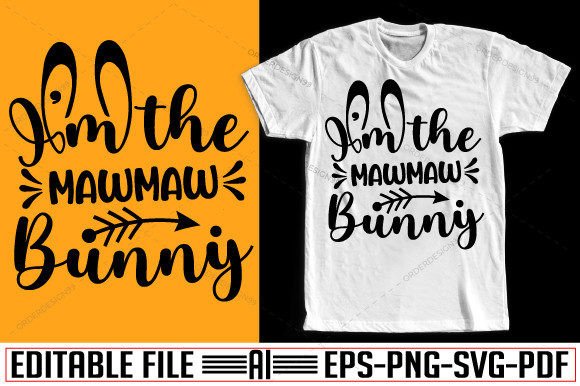
Before I even loaded the file, the title told me a story. I'm the Mawmaw Bunny isn't just a graphic; it's a character, a persona with a warm, familial charm. That first impression is crucial. When a design lands in my studio, my first question isn't about technical specs—it's about mood. What feeling does this convey to a customer holding the finished embroidered product? This bunny, with that phrasing, immediately suggests nostalgia, gentle humor, and a touch of sweet authority. It feels like a design meant for gifts, for connections, for items that tell a personal story.
Where This Design Naturally Belongs in Your Work
Imagine you're preparing a custom order for a grandmother's birthday. The client wants something unique for a tote bag she'll use at the farmers' market. You browse your library and I'm the Mawmaw Bunny catches your eye. Its playful, declarative style fits perfectly—it's personal without being overly sentimental, it's whimsical but still clear and readable. This is the kind of design that shines on practical, everyday items. My mental list starts forming: kitchen aprons, tea towels, pillow covers in a cozy den, or even the center of a child's quilt. It has a handmade, boutique-ready feel that elevates a simple sweatshirt or canvas bag into a conversation piece.
The Real-World Embroidery Test: Visuals and Stitching
In practical use, the success of an embroidery file hinges on clarity and stitch integrity. Being a vector file means scalability is a strong starting point—you can adjust size without losing detail. But as an embroidery designer, I think about how those details translate into thread. The lettering, "I'm the Mawmaw Bunny," needs to be evaluated carefully. On a dark fabric, will those satin stitches in the text pop with enough contrast? On a textured fabric like a sweater or a towel, will the fill stitches in the bunny's form hold their shape without getting lost in the weave?
I always advise a real-life scenario test. Hoop up a scrap of the actual fabric you intend to use—maybe that cotton twill for the tote bag or the fleece-backed sweatshirt material. Run a test stitch. Look at the small details. Does the design maintain its friendly personality when stitched out? A good design like this should stitch cleanly, with distinct elements that don't blend into a muddy blob. The visual appeal directly impacts product value and customer trust. A crisp, well-defined embroidery job on a cute design makes the entire handmade product feel professional and worthy of its price.
Caution Zones: Where to Be a Careful Maker
Every design has its optimal applications and its tricky territories. For I'm the Mawmaw Bunny, my notes would highlight a few considerations. First, scale. On very small items—like a baby hat or a tiny patch—the text might become too dense and difficult to stitch cleanly. Second, fabric choice. On thin, stretchy fabrics without proper stabilizer, the design's integrity could suffer. On dark fabrics, thread color selection becomes paramount; you might need to shift from classic whites and grays to brighter, more contrasting hues to keep the bunny's cheerful demeanor.
Also, consider the end-use. Is this for a pillow cover that will be washed frequently? A kitchen towel that will face wear? You need to ensure the stitch density is appropriate so the design holds up over time. This isn't a limitation of the design itself, but a standard professional practice: match the design's execution to the product's life.
Boosting Your Craft Business with a Thoughtful Design
From a small business perspective, a design like this is a versatile asset. For an Etsy seller focusing on personalized gifts, it's a ready-made solution for "grandmother" themed items. For an apparel decorator, it can be a unique offering for family reunions or custom boutique sweatshirts. Its graphic, clean nature also makes it excellent for printable mockups in your digital store, showing customers exactly how it could look on a bag or a t-shirt.
The key is integration. How does I'm the Mawmaw Bunny fit into your brand's consistency? If your shop is all about modern, minimalist embroidery, this might be too whimsical. But if your niche is heartfelt, family-oriented, or rustic-chic handmade goods, it could be a perfect addition. It affects buyer engagement because it tells a story instantly—a story that resonates with a specific, loving audience.
Your Practical Designer Checklist Before You Stitch
Before you commit this to a client's project or your next craft fair batch, run through this quick mental checklist. These steps turn a good digital file into a great finished product.
- Test on Scrap Fabric: Always. It reveals how the design interacts with your specific material and stabilizer combination.
- Check Color Contrast: View the design in a simple black-and-white mockup. Does the layout hold its shape? Then plan your thread palette for both light and dark backgrounds.
- Inspect Small Details: Zoom in on the vector file. Are there any tiny corners or details that might become problematic stitches? Adjust size or hoop placement if needed.
- Confirm Licensing for Your Use: The product description lists many uses, but always verify the specific license terms. Are you clear on whether you can use this for commercial embroidery projects, selling the finished tote bags or aprons? Never assume.
- Consider the Final Product: As you stitch, think about the end user. Will this embroidered cap sit on a curved surface? Will the baby blanket with this design be a cherished heirloom? Your craftsmanship brings the digital file to life.
In the end, I'm the Mawmaw Bunny stands out as a design with strong personality and clear application potential. It’s more than a graphic; it’s a tool for creating products that evoke warmth and connection. By approaching it with a designer's critical eye and a maker's practical hands, you can transform that vector file into embroidered goods that customers will truly love—and that will reflect the quality and care of your craft business.