Mom Make Life Beautiful: A Designer's SVG Appraisal
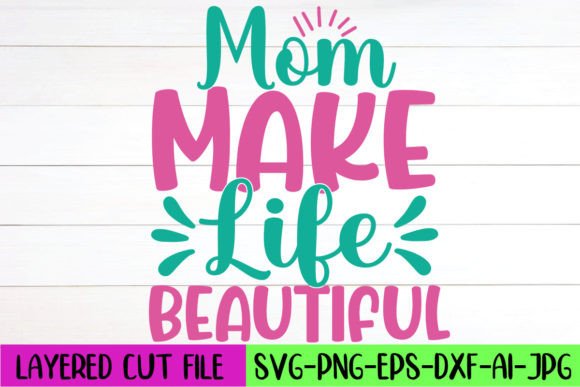
When a new design file lands on my desktop, my first question isn't about the specs. It’s about the soul of the design. What story will it tell when stitched onto fabric? The Mom Make Life Beautiful SVG design, as the title suggests, immediately communicates warmth and gratitude. It’s a sentiment-driven piece, built around a central motif that feels both classic and gently modern. The layout is balanced, not overly ornate, which from an embroidery standpoint is a promising start. It whispers "handmade gift" rather than shouting "mass-produced logo."
The Mood It Creates & Where It Naturally Belongs
This design has a soft, celebratory personality. It’s not for bold brand statements; it’s for personal connection. I picture it embroidered onto a linen apron for a mother who loves to cook, or as a delicate feature on a cotton pillow cover in a cozy living room. The theme is universal enough for everyday items yet special enough for holiday gifts—think Mother’s Day, birthdays, or a "just because" present from a grateful child. For small business owners in the handmade space, especially those selling on Etsy or at craft fairs, this design taps into a powerful emotional market: personalized family-centric products.
My mind goes to a recent custom order: a client wanted a unique gift for her mother, something more lasting than a card. We settled on a high-quality cotton tote bag. A design like Mom Make Life Beautiful would have been a perfect contender. Its visual personality suggests care and effort, elevating a simple bag into a cherished keepsake. The value isn't just in the item, but in the sentiment stitched onto it.
Performance in Real Embroidery Projects
Let’s move from feeling to function. How does this SVG design translate into actual stitches? The clean, layered file structure (especially with the included AI and EPS formats) is a strong foundation for digitizing into an embroidery file. This means less time cleaning up messy vectors and more time focusing on stitch types.
For custom apparel like sweatshirts or t-shirts, the design’s moderate detail level should allow for good clarity without overwhelming a knit fabric. On a structured canvas tote bag, it would really shine, with satin stitches for the lettering and fill stitches for the decorative elements holding up well to wear. For baby items or nursery decor, scaled appropriately on a soft blanket, it could create a lovely, gentle focal point. As an embroidered patch, it would be charming, though I’d be mindful of the smaller elements during the digitizing process to ensure they remain distinct.
In a commercial embroidery context—say, a boutique producing a limited run of kitchen towels or apron sets—this design offers a consistent, recognizable motif that builds a cohesive product line. Its appeal is in its authenticity, which customers trust.
Where Caution is Needed: The Practical Realities of Stitching
No design is perfect for every scenario. Here’s where a designer’s experience dictates careful planning. The charming details in Mom Make Life Beautiful could become muddled if embroidered at a very small hoop size. Trying to stitch it onto the curved surface of a cap would require significant simplification and testing. On textured or stretchy fabrics, the finer lines might not maintain their crispness without the correct stabilizer strategy.
Dark fabric presents a classic challenge. A design with lighter, positive-space elements needs a thoughtful thread color palette to ensure it pops and doesn’t get lost. Some of the potential tiny lettering or decorative accents might not survive frequent washing on items like everyday tea towels unless the stitch density is robust. This isn't a flaw of the design itself, but a reminder: the SVG is a blueprint. The final embroidery project depends on your digitizing skill and material choices.
Affecting Value, Appeal, and Professionalism
Using a well-constructed design like this directly impacts your finished product’s perceived value. A clean stitch-out with good contrast makes a gift feel professional and thoughtfully made, increasing buyer engagement. For a small shop product, it enhances brand consistency—if your shop specializes in heartfelt, family-oriented goods, this design aligns perfectly. It’s "giftable" by nature, which is a huge advantage for creative entrepreneurs.
However, the visual appeal hinges on execution. Poor digitizing can turn elegant curves into jagged satin stitch nightmares. The clarity of the sentiment is paramount; if "Mom Make Life Beautiful" reads poorly, the entire emotional impact is lost.
Essential Designer Notes Before You Hoop Anything
Before I'd ever run this design for a client or my own craft business merchandise, my process is methodical.
- First, I’d test it on scrap fabric identical to my final product. This reveals how the details behave with my chosen thread and stabilizer.
- I’d check thread color contrast against both light and dark backgrounds, often creating simple black and white mockups to judge form alone.
- Inspecting the small details in the SVG file before digitizing is crucial. What might be a thin vector line could become an unstable single running stitch.
- I’d confirm the physical hoop size needed to accommodate the design at my intended scale for the item—a pillow cover allows more space than a baby bib.
- Most importantly, I’d verify the licensing terms for this digital embroidery file. The product description mentions multiple file formats for use with various machines and software, but it doesn’t explicitly state the license. Always confirm whether it’s for personal use, commercial use, or both before selling finished items or incorporating it into your own digital product listings.
This due diligence separates a hobbyist from a professional. It ensures the design doesn’t just look good on screen, but makes life beautiful in thread and fabric, fulfilling its promise as a reliable crafts and graphics asset for your real-world projects.